Why do people learn Icelandic?
For a language spoken by only ~380,000 people on a rock in the middle of the North Atlantic, Icelandic has a surprisingly large and passionate community of learners.
People rarely learn Icelandic for pure utility (like they might with Spanish or English). Instead, they are usually driven by one of four specific motivations: The Viking Connection, The "Cool" Factor, Linguistic Curiosity, or Immigration.
The Time Machine Effect (Old Norse)
This is the single biggest draw for history buffs and fantasy fans.
Reading the Sagas: Icelandic has changed so little over the last 1,000 years that modern Icelanders can still read medieval texts (the Sagas and Eddas) with relative ease. For students of history, learning Icelandic is effectively learning to read the "Viking language" (Old Norse) without dealing with a dead language.
The Vikings & The Northman Influence: Popular media depicting Vikings often uses reconstructed Old Norse or modern Icelandic for dialogue. Fans of shows like Vikings or the movie The Northman often flock to the language to feel closer to that era.

The Pop Culture & Music Appeal
Iceland hits above its weight class in cultural exports, creating a "cool" factor that draws learners in.
The "Björk & Sigur Rós" Effect: For decades, fans of alternative music have been fascinated by the ethereal sound of the Icelandic language. Bands like Sigur Rós (who sometimes sing in a made-up gibberish called 'Hopelandic' but often in Icelandic) and Björk have inspired thousands to learn the lyrics.
The Metal Scene: Iceland has a world-renowned Black Metal and heavy metal scene (e.g., bands like Sólstafir or Skálmöld). Fans of this genre often learn the language to understand the harsh, poetic lyrics that deal with nature and depression.
TV & Film Tourism: Since Game of Thrones (filmed largely in Iceland) and Trapped (Ófærð) became hits, people have fallen in love with the landscape. Learning the language becomes a way to mentally "stay" in that landscape.
Linguistic Purism & Challenge
For language nerds (polyglots), Icelandic is a trophy language.
Linguistic Protectionism: Iceland has a committee that invents new words for modern technology rather than borrowing from English. For example, instead of "computer," they say tölva (a mix of "number" and "prophetess"). This "pure" vocabulary is fascinating to linguists.
The Grammar Challenge: It is notoriously difficult for English speakers due to its archaic grammar (four cases, three genders, complex inflections). Some people learn it simply to prove they can, like climbing a linguistic mountain.
Immigrants & Practical Integration
While you can survive in Reykjavík with just English, you cannot thrive without Icelandic.
Deep Integration: Immigrants who want to fully integrate, understand the news, or work outside the tourism/tech bubbles learn it to break through the "social barrier."
The "Secret Language" Club: Because so few people speak it globally, learners often feel part of an exclusive club. Speaking it allows for a level of intimacy and respect from locals that English cannot buy.
Where Should You Start?
If you are ready to tackle the "Viking language" but don't want to get bogged down in dry textbooks, you need a resource that blends practical utility with cultural depth.
We recommend starting with our Icelandic lesson. It is designed to take you from absolute beginner to culturally competent by combining the mechanics of the language with the soul of Iceland.
Master the Sounds: Audio guides to help you conquer the notorious trilled R and pre-aspirated consonants.
Essential Survival Skills: distinct modules for useful phrases and clear, accessible grammar breakdowns.
Next
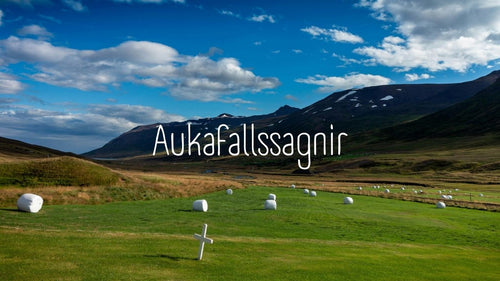
Photo by Cassie Boca